
Your New Year Health Appointment Checklist for 2026
01/02/2026
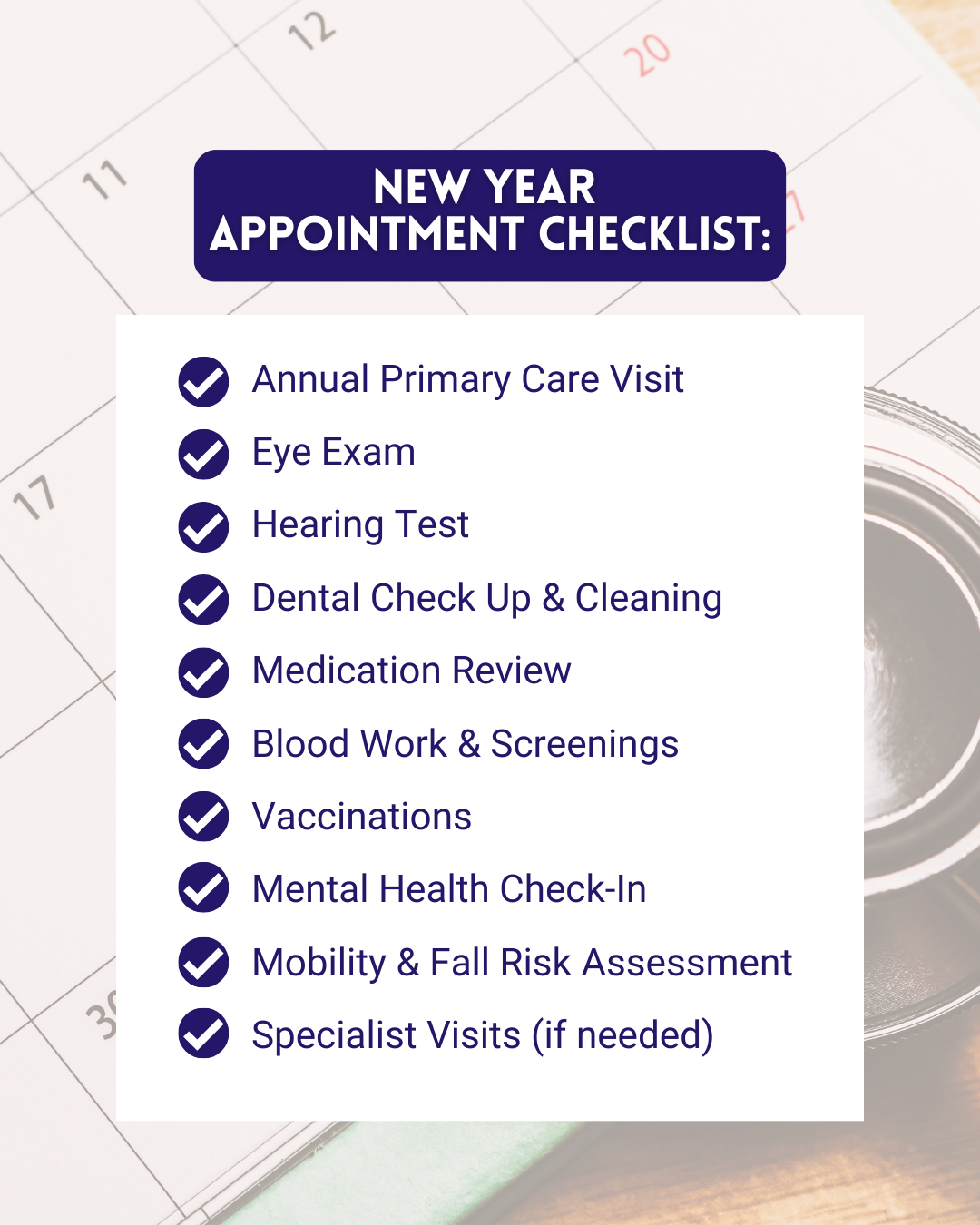
Start 2026 feeling organized, informed, and ready to take charge of your health. Use this simple checklist to plan appointments and conversations with your care team.
Core medical visits
-
Annual primary care visit
Schedule a yearly visit with your main doctor to review overall health, chronic conditions, medications, and any new symptoms or concerns. Bring written questions so nothing gets missed. -
Specialist visits (if needed)
Confirm follow‑ups with cardiology, endocrinology, neurology, or other specialists involved in your care. Ask whether visit frequency or tests should change based on how you have felt over the past year.
Vision, hearing, and dental care
-
Eye exam
Book a comprehensive eye exam to check for vision changes and conditions such as glaucoma, cataracts, or macular degeneration. Note any new issues like trouble reading, driving at night, or glare. -
Hearing test
Consider a hearing evaluation, especially if family or friends notice you turning up the TV or asking people to repeat themselves. Good hearing supports balance, safety, and social connection. -
Dental checkup and cleaning
Schedule a dental visit for cleaning and an exam. Oral health affects nutrition, comfort, and heart health, and small issues are easier to treat when caught early.
Medications, tests, and vaccines
-
Medication review
Bring a complete list (or all bottles) of prescriptions, over‑the‑counter medicines, vitamins, and supplements. Ask whether each medication is still needed, if dosages are correct, and what side effects to watch for. -
Blood work and screenings
Talk with your clinician about lab tests such as cholesterol and blood sugar, plus age‑ and risk‑appropriate screenings (for example bone density scans or other recommended tests). Ask what each test is for and when results will be available. -
Vaccinations
Review your vaccine status and whether you need flu, COVID, shingles, pneumonia, tetanus, or other boosters. Clarify timing if you have multiple vaccines planned.
Daily function and emotional well‑being
-
Mental health check‑in
Share any changes in mood, interest in activities, stress level, memory, or sleep. Ask whether counseling, lifestyle changes, or medication might help if you have been feeling down, anxious, or unusually forgetful. -
Mobility and fall‑risk assessment
Mention any recent falls, near falls, dizziness, or trouble with stairs or getting out of chairs. Ask about balance and strength exercises, assistive devices, or home safety ideas to reduce fall risk.
Preventive care helps catch small issues early. A little planning now can make a big difference all year long.