
Fall Vaccines for Seniors: What Older Adults and Caregivers Should Know This Season
10/07/2026
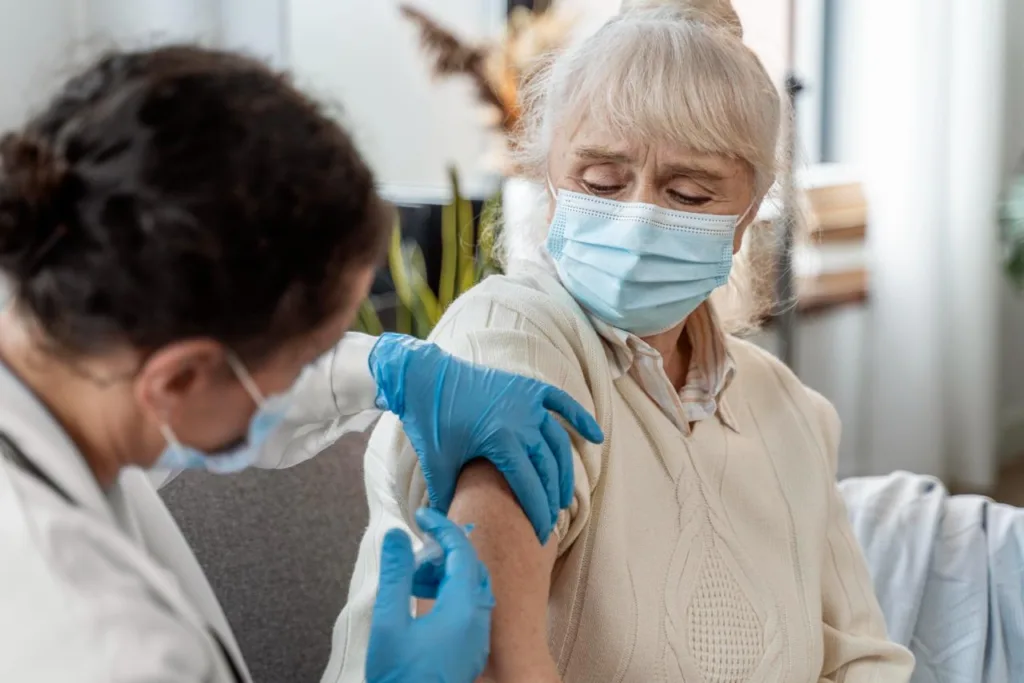
As the weather cools, respiratory viruses like flu, COVID-19, and RSV begin to spread. For older adults, these illnesses can be far more serious than a bad cold — so fall is the season to think about protection.
This guide walks through the fall vaccines for seniors in plain language: what each one does, when to get it, and what Medicare and Medicaid cover. It is written for older adults and the family caregivers who help them stay well. Staying healthy at home is a team effort, and steady personal care at home can help loved ones keep up with the everyday routines that support good health — including staying current on recommended vaccines. Always talk with a doctor or pharmacist about what is right for you.
Key Takeaways
- Older adults are more vulnerable to serious illness from flu, COVID-19, and RSV.
- Adults 65+ are encouraged to get an enhanced flu shot (high-dose, adjuvanted, recombinant, or the new mRNA option) when available.
- The single-dose RSV vaccine is recommended for all adults 75+, and for those 50–74 at higher risk.
- Pneumococcal and shingles vaccines are also important for older adults.
- Medicare and Medicaid cover recommended vaccines for eligible beneficiaries — often at no cost.
Why Immune Response Weakens With Age
Our immune systems change as we grow older. This natural process, sometimes called immunosenescence, means the body responds more slowly and less strongly to infections — and sometimes to vaccines, too.
That is why a bout of flu or a respiratory infection that a younger person shrugs off can send an older adult to the hospital. It is also why some vaccines for seniors come in stronger, “enhanced” versions designed to produce a better immune response.
The takeaway is simple: vaccines matter even more with age, not less. They are one of the most effective ways to protect health and independence.
The Flu Shot: High-Dose and Adjuvanted Options for 65+
The flu shot for seniors over 65 is one of the most important vaccines of the season. Flu can be dangerous for older adults, and each year it leads to many hospitalizations among seniors.
Everyone six months and older is encouraged to get an annual flu shot. But for adults 65 and older, health experts recommend an enhanced flu vaccine when available — one that is stronger than the standard shot. Options include:
- High-dose flu vaccine — contains more of the ingredient that triggers immunity.
- Adjuvanted flu vaccine — includes a booster component that strengthens the immune response.
- Recombinant flu vaccine — made with a technology that can produce a stronger response.
- New mRNA flu vaccine — a newer option now available for adults 50 and older.
One important note: if an enhanced version is not available, do not delay. The best flu vaccine is the one you can get. Getting vaccinated on time matters more than holding out for a specific type.
COVID-19 Boosters
COVID-19 remains a real risk for older adults, and updated vaccines are available each fall to match circulating strains.
Guidance has shifted in recent seasons toward a “shared decision-making” approach — meaning the choice is made in conversation with your healthcare provider. Many medical groups continue to recommend an updated COVID-19 vaccine for older adults, and some suggest that adults 65 and older consider a second dose several months after the first to maintain protection as immunity fades.
Because recommendations can change, the best step is to talk with your doctor or pharmacist about whether an updated COVID-19 vaccine is right for you this season.
RSV: A One-Time Vaccine Most Seniors Have Never Heard Of
RSV (respiratory syncytial virus) is a common respiratory virus. In most people it causes cold-like symptoms, but in older adults it can lead to serious illness, hospitalization, and even death.
The good news is that a vaccine now offers strong protection — and for most people, it is a one-time shot. Current guidance recommends the single-dose RSV vaccine for:
- All adults 75 and older.
- Adults 50–74 who are at increased risk due to certain chronic conditions (such as heart or lung disease) or who live in a nursing home.
Unlike the flu shot, the RSV vaccine is not an annual vaccine for most people — a single dose provides lasting protection. Ask your provider whether it is right for you.
Pneumococcal and Shingles Vaccines
Two more vaccines round out protection for older adults, and both can often be given year-round rather than only in fall.
- Pneumococcal vaccine. Protects against pneumococcal disease, which can cause pneumonia, bloodstream infections, and meningitis. There are a few types, and your provider can recommend the right one and schedule for you.
- Shingles vaccine (Shingrix). Protects against shingles — a painful rash caused by the reactivation of the chickenpox virus — and its long-lasting nerve pain. It is recommended for adults 50 and older and is given in two doses, spaced two to six months apart.
Timing: When to Get Each One
Good timing helps vaccines provide protection right when you need it most. A few general guidelines:
- Flu shot: Ideally by the end of October, before flu activity picks up. Flu season often peaks between December and February.
- COVID-19 vaccine: In the fall, as updated versions become available.
- RSV vaccine: As soon as it is available if you are eligible, since RSV season timing varies.
- Pneumococcal and shingles: Any time of year — no need to wait for fall.
If you are unsure about timing, your pharmacist or doctor can help you plan.
Can They Be Given on the Same Day?
Yes — in most cases, more than one vaccine can be given on the same day. Many people get their flu and COVID-19 shots at the same visit, for example, often in different arms.
Getting more than one vaccine at once is generally safe and convenient, and it saves an extra trip. That said, your provider knows your health history best, so it is always worth confirming what is right for you.
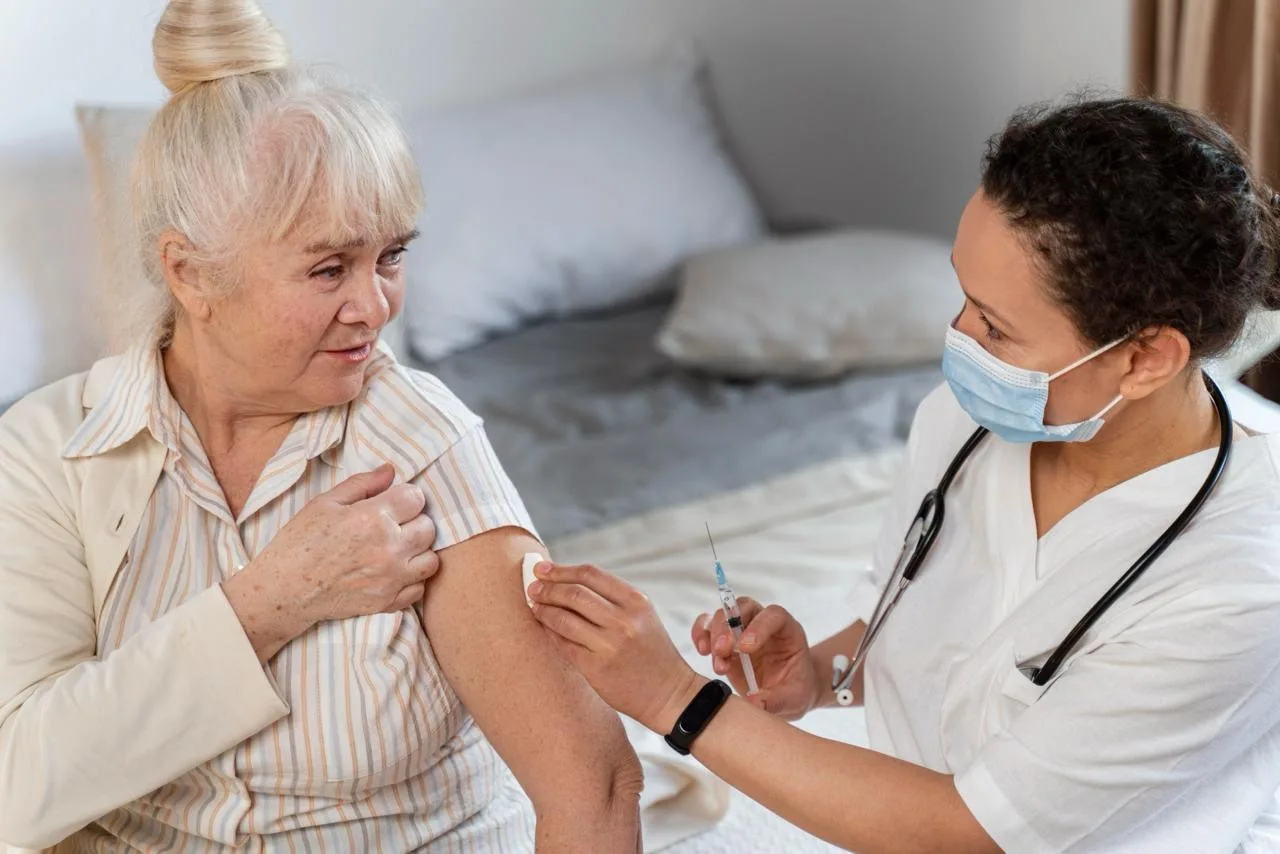
Common Side Effects and What’s Not Normal
Most vaccine side effects are mild and short-lived — a sign the body is building protection. Common, normal reactions include:
- Soreness, redness, or swelling where the shot was given.
- Mild fatigue or achiness.
- A low-grade fever or headache for a day or two.
These usually fade within a couple of days. What is not typical — and worth calling a doctor about — includes a high fever, symptoms that get worse instead of better, or any signs of a severe allergic reaction such as trouble breathing, swelling of the face or throat, or a fast heartbeat. If you ever notice signs of a serious reaction, call 911 right away.
What Medicare and Medicaid Cover
Cost should not be a barrier to protection, and for most seniors, it is not. Medicare and Medicaid cover recommended vaccines for eligible beneficiaries, often at no out-of-pocket cost:
- Medicare Part B covers the flu, COVID-19, and pneumococcal vaccines at no cost when you use a provider or pharmacy that accepts Medicare.
- Medicare Part D covers vaccines like shingles and RSV at no cost, thanks to recent changes that removed out-of-pocket charges.
- Medicaid generally covers recommended adult vaccines — including flu, COVID-19, RSV, shingles, and pneumococcal — at no cost for most beneficiaries.
If you are ever charged for a vaccine that should be free, ask the pharmacy to check how it was billed, or contact your plan. Coverage details can vary, so it is always smart to confirm with your plan before your appointment.
Where to Get Vaccinated Without Leaving Home
For seniors who are homebound or have trouble getting out, leaving the house for a vaccine can feel like a real obstacle. Fortunately, there are options:
- Home visits. Some pharmacies, home health providers, and local health departments offer in-home vaccination for homebound seniors.
- Local pharmacies. Many pharmacies offer walk-in vaccines, which can be quicker than a doctor’s appointment.
- Doctor’s office visits. Your primary care provider can administer vaccines during a regular visit.
- Community clinics. Local health departments and community centers often host seasonal vaccine clinics.
Ask your pharmacist or doctor about home vaccination options in your area — they can often point you in the right direction.
How Caregivers Can Track and Transport
Family caregivers play a big role in keeping a loved one up to date on vaccines. A little organization goes a long way:
- Keep a simple record. Write down which vaccines your loved one has received and when, so nothing is missed or doubled up.
- Set reminders. Note when the flu shot is due each fall, and any follow-up doses (like the second shingles shot).
- Plan transportation. Arrange rides to the pharmacy or clinic, or ask about home visits if getting out is difficult.
- Go together. A companion can offer reassurance, help ask questions, and remember the answers.
- Watch for side effects. Check in for a day or two afterward to make sure any reaction stays mild.
This is exactly the kind of steady, everyday support that makes a difference. Through companion care for seniors, a caring aide can help with reminders, transportation to appointments, and friendly company along the way — so staying protected feels easy, not overwhelming.
AI Summary
Fall vaccines for seniors help protect older adults from serious illness caused by flu, COVID-19, and RSV, which become more dangerous as the immune system weakens with age. Adults 65 and older are encouraged to get an enhanced flu vaccine (high-dose, adjuvanted, recombinant, or the new mRNA option), consider an updated COVID-19 vaccine through shared decision-making with a provider, and receive the single-dose RSV vaccine if they are 75+ or 50–74 at higher risk, along with pneumococcal and shingles vaccines. Timing matters — the flu shot is best by late October — and multiple vaccines can usually be given the same day, with mostly mild side effects. Medicare and Medicaid cover recommended vaccines for eligible beneficiaries, often at no cost, and homebound seniors may access in-home vaccination. CareChoice provides non-medical home care and companionship that help seniors keep up with vaccine reminders, transportation, and everyday health routines, while all medical decisions stay with their doctor.